I had an American Independence Day themed party a few weeks ago and, on the day itself, I was bullied into wearing a highly flammable Uncle Sam outfit. (Incidentally, my brother in law Ross won the prize for best outfit, as you’ll see below).
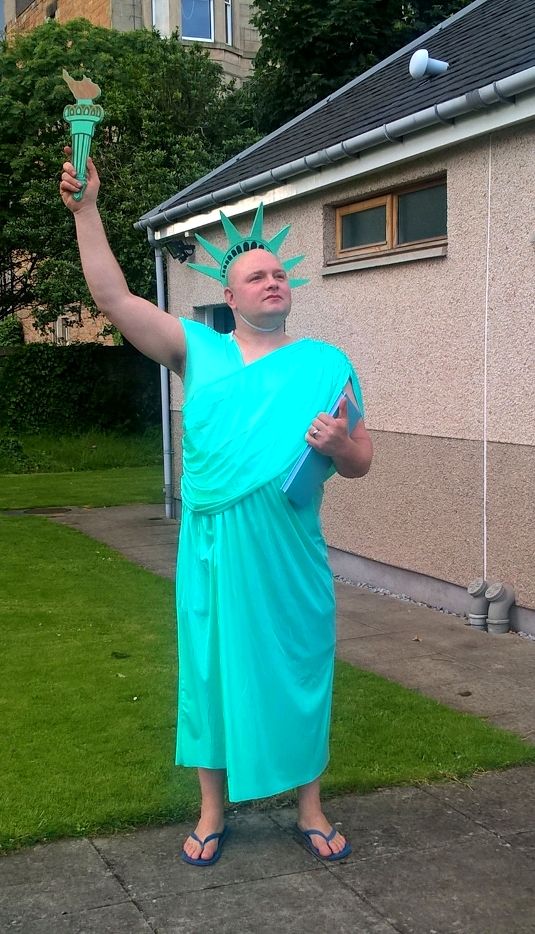
For years I thought that Uncle Sam was a fictional character: I’m sure someone told me a long time ago that his name was simply an extension of the initials U.S. , draped in appropriately patriotic colours and made to resemble an ageing Abe Lincoln.
At the FDR Presidential Library in upstate New York, the tour guide took great pleasure in telling me that he was not only ‘real’ but – inevitably and somehow – Scottish as well.
‘Uncle’ Sam Wilson was the grandson of Robert Wilson, originally from Greenock on Scotland’s west coast. After time in the US Revolutionary Army, Sam became a successful businessman in the early 19th century firstly through clay and brick making and then meat packing and supply during and after the War of 1812. Barrels and packages bearing combinations of his name and US were long-awaited and well-received by serving troops who in turn referred affectionately to parcels from Uncle Sam.
He is now ubiquitous, recognised across the world, and even had his own ‘day’ (13th September 1989) proclaimed by President George H W Bush.
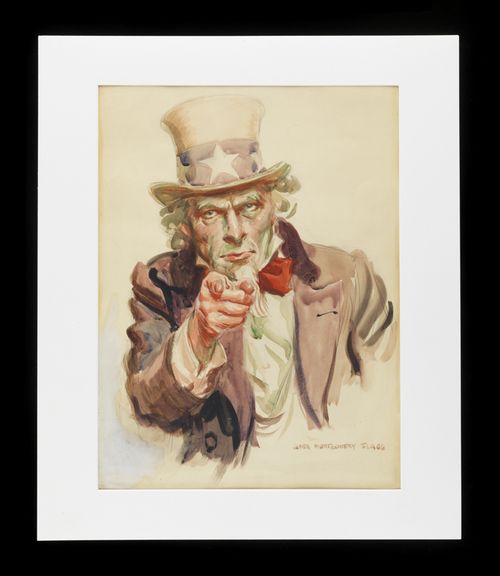
Perhaps the most famous image of Uncle Sam is from this 1917 James Montgomery Flagg painting, used to recruit soldiers for World War 1. It deliberately copied the UK’s similarly iconic WW1 poster of Lord Kitchener (“Your Country Needs You”).
Kitchener himself died in 1916 just off the Orkney Islands…on Scotland’s west coast.
 snowinginspace